
By editing the Keystone connection for an application (from Keystone settings > Keystone connections or through a link at the top of the application page), you can configure the federations of which Keystone is aware.
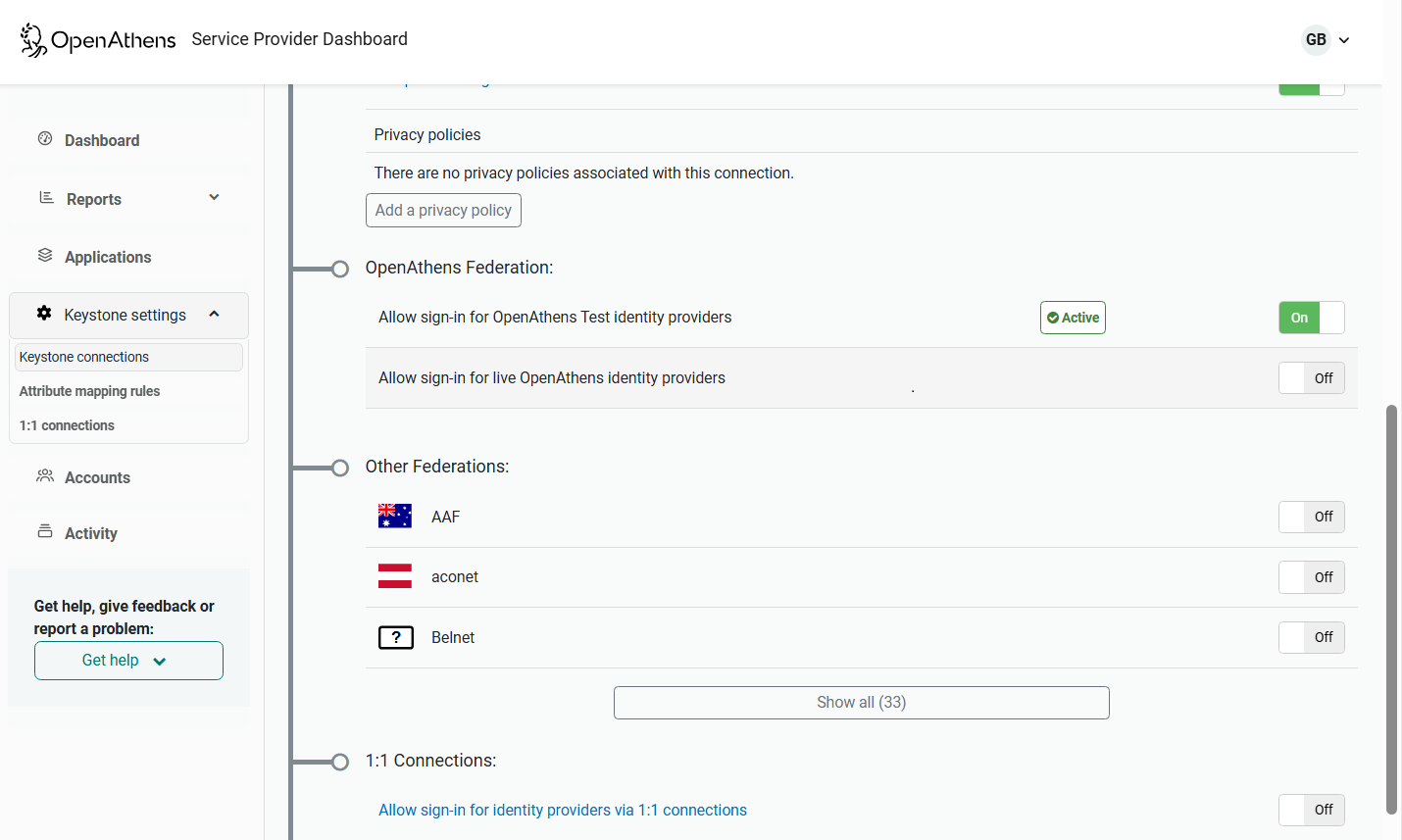
At the bottom of a Keystone connection page, find the ways in which you can connect identity providers to your application(s). There are three sections:
-
OpenAthens Federation: our own federation
-
Other Federations: standard federations around the world
-
1:1 Connections: connections to individual IdPs that are not in a federation, or with which you don’t share a federation. See Entities that are not in a federation for how to configure these connections
Edit the settings and save your changes to make the data available to Keystone.
Editing your federation settings here does not add you to those federations - that is a function of the federation operators. See How to join other federations.
Add a federation
-
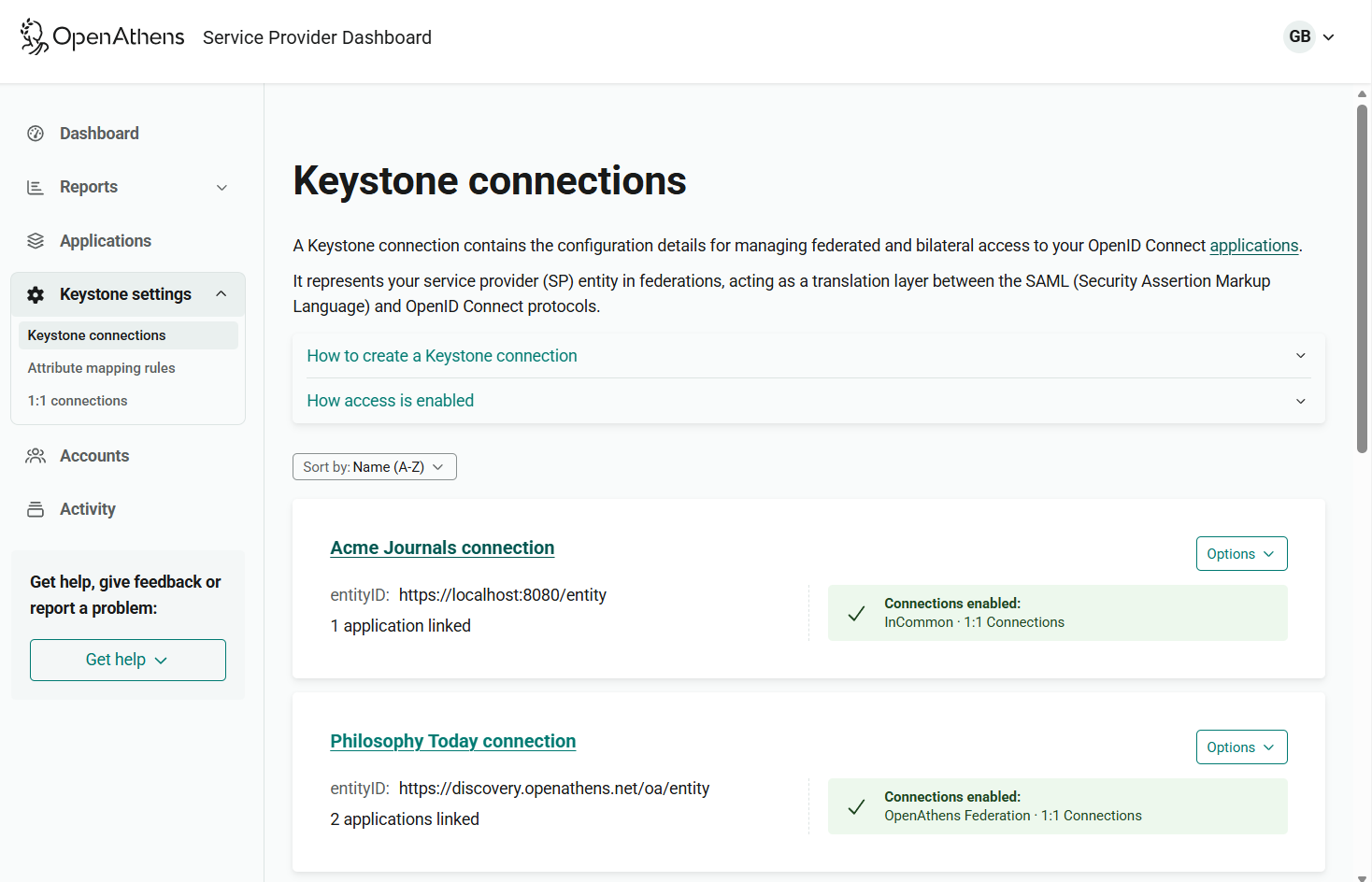
Go to Keystone settings > Keystone connections.
-
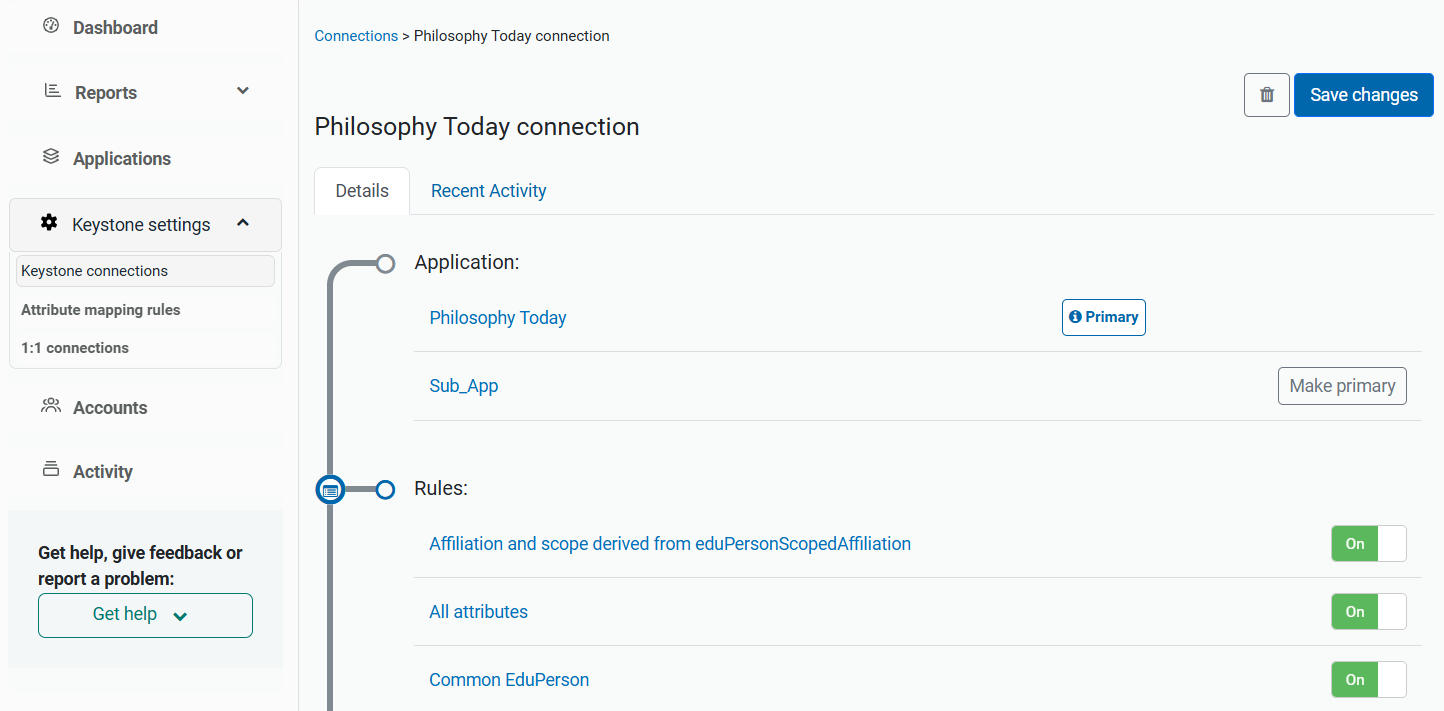
Select the required connection from the list to edit it.
-
Scroll down the page to the sections beginning OpenAthens Federation.
-
Under OpenAthens Federation, switch on Allow sign-in for OpenAthens Test identity providers to allow access through OpenAthens for testing. Switch on Allow sign-in for live OpenAthens identity providers when the application is ready to go live.

-
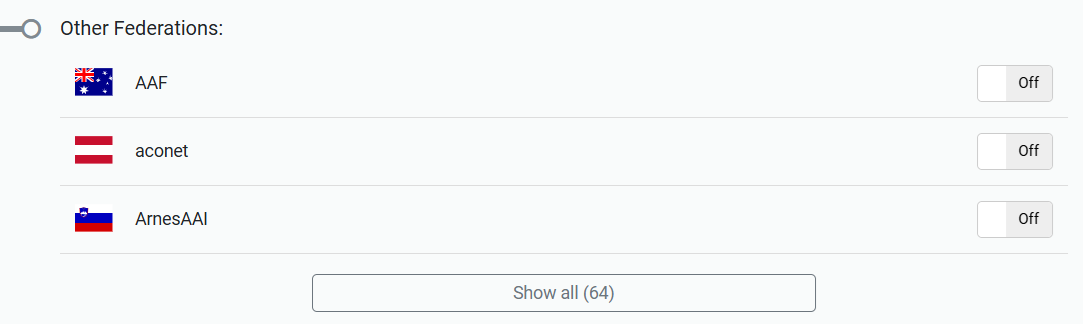
Under Other Federations, switch on any other federations to which you belong or that you plan to join.
-
Press Save changes at the top right.
After saving your changes
-
If you added new federations, you still need to go through those federations' membership processes to join them. See How to join other federations
Statuses and errors
Some federations may be shown with a status badge, such as Info or Error.

To learn more about a status, hover over the badge. You’ll see further information in a tooltip.
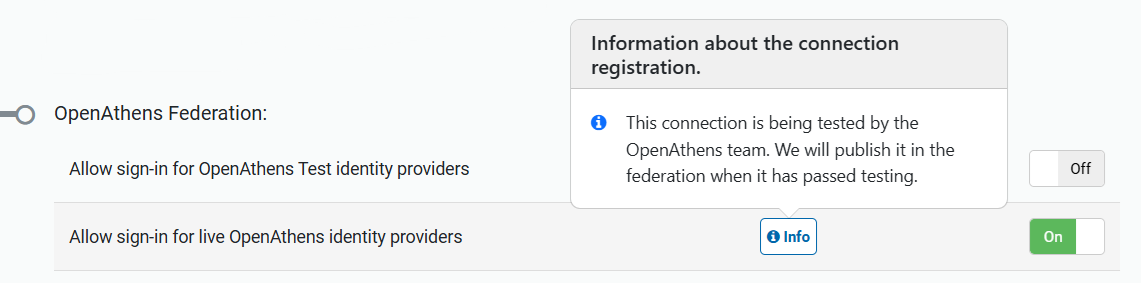
The system performs a basic error check that flags differences between the local and remote metadata. Unimportant differences, such as formatting in a metadata file, can occasionally produce incorrect Error statuses.