
From the list of accounts or the account search results page, you can download user account data to review or store offline.
You can download all of the accounts in a list or select those you want. If you have a very large number of accounts, we recommend first running a search to isolate a subset of the accounts. More than 100,000 accounts may be too large for a single download.
-
Go to Accounts > List or search for accounts to download.
-
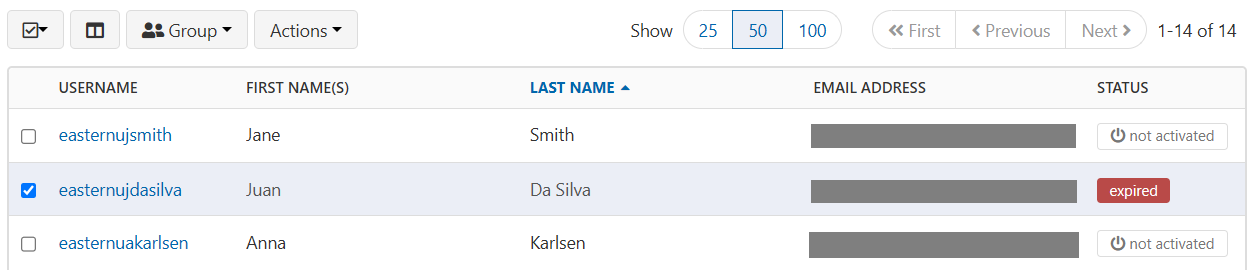
From the list of accounts that meet your criteria, select those to include in the download. From the Select menu, you can choose All to download all accounts in the list or All those shown to download accounts on the current page. You can also select individual accounts by ticking the checkboxes in the left column.

-
From the Actions menu, choose Download accounts.

-
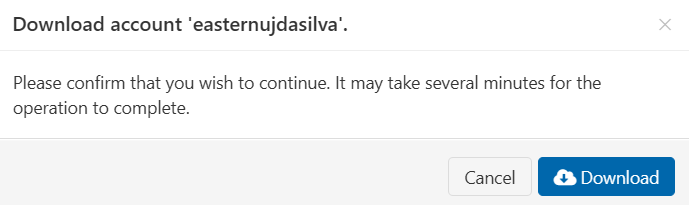
You are asked to confirm the download. Press Download to finish.
-
OpenAthens then generates a file of your chosen data. This process usually takes from a few seconds to a few minutes to complete, depending on network traffic and the number of accounts you selected. A large download may take longer.
When the file is ready, you will see a success message in the interface. You will also receive an email.
View the download file
To keep personal information secure, the file is not sent by email. You must download it from the Compass admin interface to view or store offline.
To access the download file:
-
From the main menu, go to Management > Downloads
-
Follow the downloads link in the success message that displays once your download is complete
-
Follow the link in your notification email
-
Click Downloads on the OpenAthens Compass home page
On the Downloads page, you see a list of all available files. Each file has a name that includes the type of data (e.g. ‘personal_accounts’) and the date. Files are displayed in chronological order, with the most recent first. They are automatically deleted after 30 days.
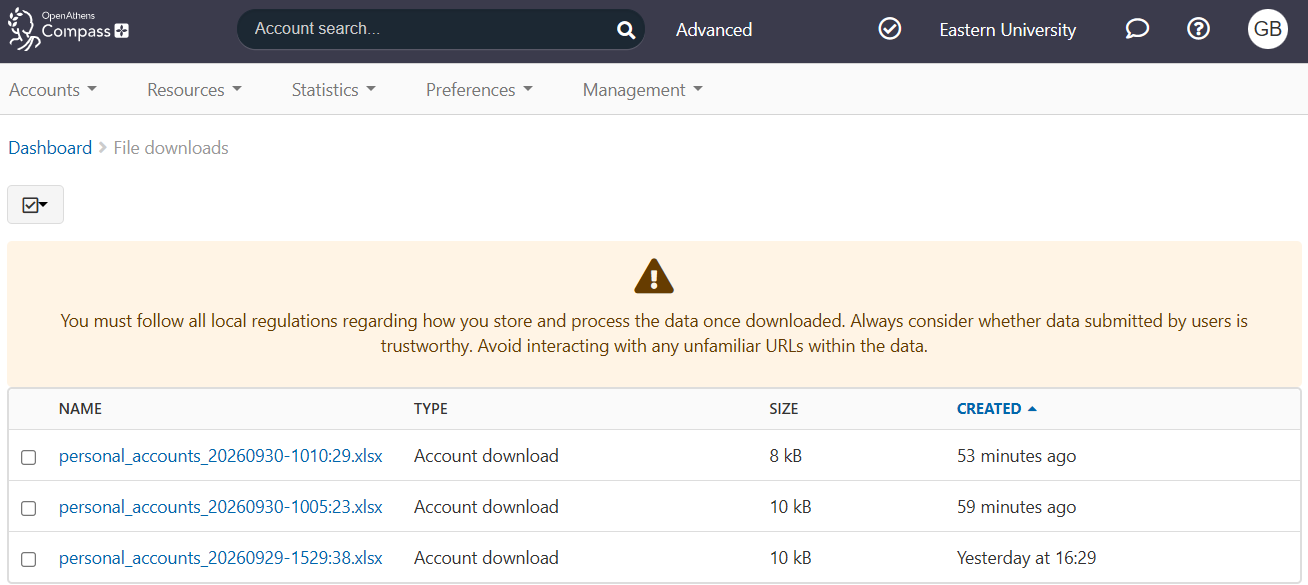
To access a file, click on its name. The file automatically downloads in your browser.
You must follow all local regulations regarding how you store and process the data once downloaded. Always consider whether data submitted by users is trustworthy. Avoid interacting with any unfamiliar URLs within the data.
Why do personal and local accounts have different fields?
Because personal accounts are created wholly in OpenAthens, while local accounts draw information from your local user directory, they include some different data.
-
Personal account data includes an expiry date. Local accounts don't have an expiry date because expiration is managed by your local directory
-
Personal accounts include all the attributes from your schema, whether or not they contain data. Local accounts show only the mapped attributes you have set up on the connection